Get your complimentary CXI Audit: Apply today

Back to Insights

Design Systems as a Growth Lever

April 20, 2026
Design System

How much time are you and your team spending reviewing pages, fixing inconsistencies, and rebuilding components that should be standardized?

That's often a sign you need to establish a design system from the start.

What is a design system?

A design system is the operating system for your product or website interface. It is a structured collection of reusable tokens, components, and standards that align design and engineering around a shared language.

By mapping design decisions directly to code, a design system eliminates the translation gap. It enables every stakeholder, from designers and developers to product managers, to reference a single source of truth rather than a fragmented set of static files. This allows your team to create a clear hierarchy that reduces mental overhead and lets teams focus on innovation rather than reinventing basic elements.

For complex commerce situations, having a design system in place increase efficiency and ultimately impacts bottom line.
Tackling Design & Tech Debt 

What is the main benefit of having a design system? It comes down to speed and cost. Organizations often become burdened by legacy design patterns and difficult-to-maintain codebases. This is where a design system delivers the greatest value. If your team is navigating inconsistent interfaces or sprawling, unstructured CSS, you are incurring a daily complexity cost that slows development and increases risk.

Check the state of your design system

Download the Checklist

The Anatomy of a System

What are the key elements of a well built design system? At Datmos, we apply the Atomic Design methodology to structure our client's systems.

  • Design Tokens: The DNA of the system with core variables (colors, typography, spacing).
  • Components: Reusable UI elements (buttons, inputs, modals).
  • Patterns: Groups of components (headers, product grids).
  • Mockups: Pages built from predefined components.
  • Accessibility: Compliance built directly into components.

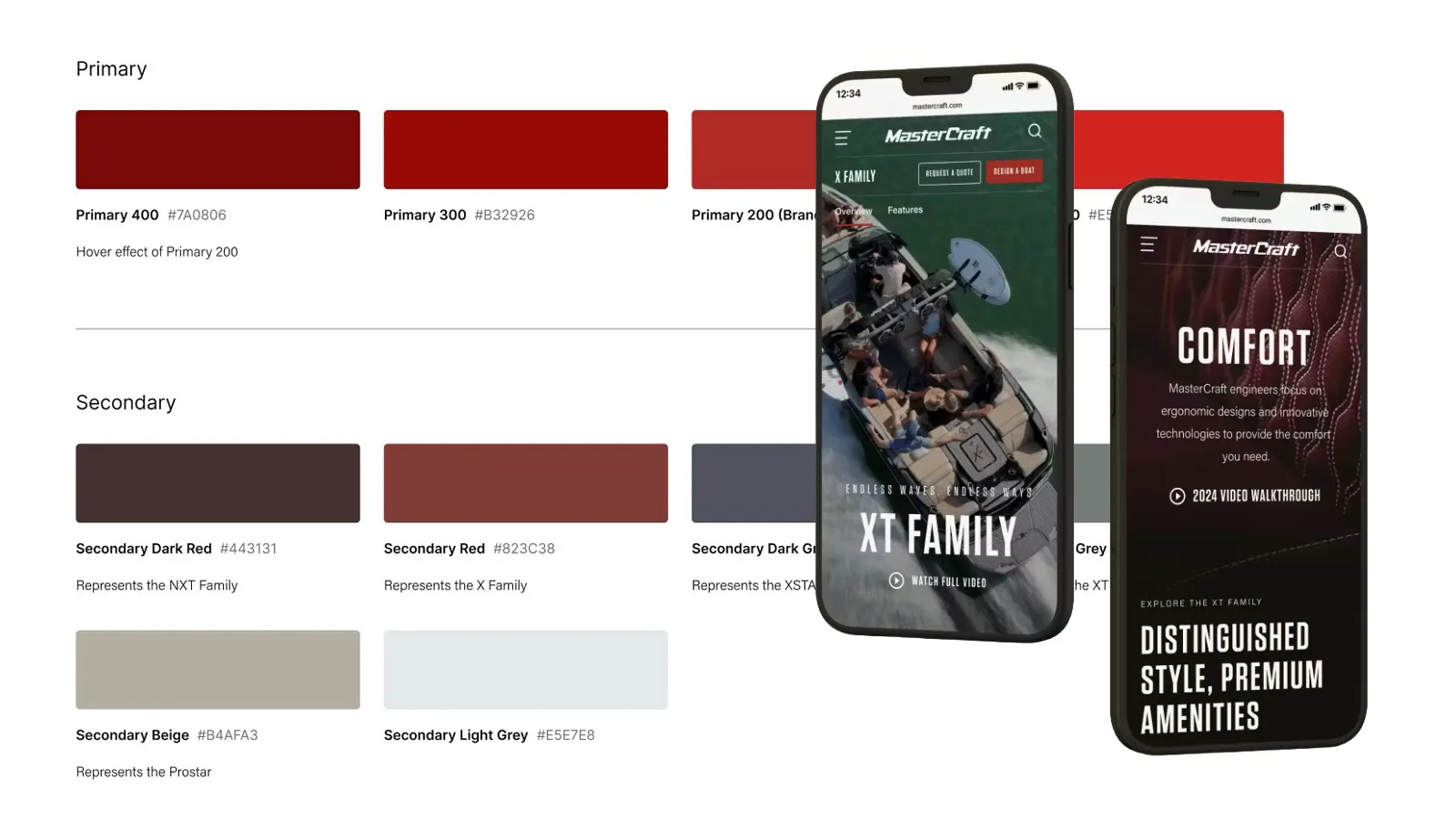
Design System for Mastercraft

The ROI of Implementation:

  • Scalability: Launch new features in days, not weeks, by leveraging existing patterns.
  • Legacy Transformation: Instead of a complicated big-reveal rebuild, a design system allows you to incrementally replace technical debt with standardized components.
  • Reduced QA Overhead: When components are pre-tested, the QA cycle shifts from "does this button look right?" to "does this user flow work?"
  • Consistency as a Feature: Consistency builds user trust. A design system ensures that a brand experience feels uniform page to page or from the website to mobile app.
351%
ROI for Handoff Workflows

Utilizing integrated design-to-code workflows (like Figma Dev Mode) yielded a 351% ROI over three years. Figma & Forrester Total Economic Impact Study (2025)

85-90%
Testing Savings

By using pre-tested, production-ready components, QA teams reported a massive reduction in the time needed to verify UI bugs (Forrester, 2025).

30%
Developer Time Recovery

Developers save nearly a third of their week by no longer having to "guess" at specs or manually translate design tokens into CSS (Forrester, 2025).

Are you ready for a design system?

A design system brings product strategy to life. It reduces mental overhead, creates consistency at scale, and gives teams the foundation to focus on innovation instead of reinventing the basics. Tokens reinforce brand consistency, components and patterns accelerate delivery, standardized mockups reduce rework, and built-in accessibility supports compliant, scalable experiences across every touchpoint.