Get your complimentary CXI Audit: Apply today

Back to Insights

Beyond the data lake: what Databricks Summit 2026 revealed about commerce intelligence

June 22, 2026
Databricks Summit 2026 recap

Databricks is a leading data and AI platform used by thousands of enterprises to build, manage, and activate their data at scale, the infrastructure layer underneath modern AI, analytics, and real-time decision-making. Every year, their Data + AI Summit brings together the engineers, architects, and executives shaping where that platform goes next.

Our team was on the ground in San Francisco June 15-18 as part of our strategic partnership with Databricks. Here's what shifted, what it signals for commerce brands, and why the gap between organized data and activated data just became the most expensive problem in the industry.

The infrastructure era is closing. Something harder is starting.

For the last several years, the dominant conversation in enterprise data has been governance, organization, and infrastructure. Data lakes, data meshes, lakehouse architectures, the focus has been on getting data into one place, making it trustworthy, and making it accessible. It's also no longer sufficient.

What Databricks made clear at Summit 2026 is that the next competitive frontier is not about where your data lives or how it's governed. It's about whether your data understands your business and right now, for most commerce organizations, it doesn't.

The companies arriving at this realization first and the ones who build the context layer now, will have a compounding advantage in everything that sits on top of it: AI agents, personalization, customer activation, and real-time commerce decisions.

Genie ontology: the mechanism nobody is talking about enough

The technical centerpiece of this year's Summit was Genie ontology and it's worth understanding what it actually does before deciding how much it matters to you.

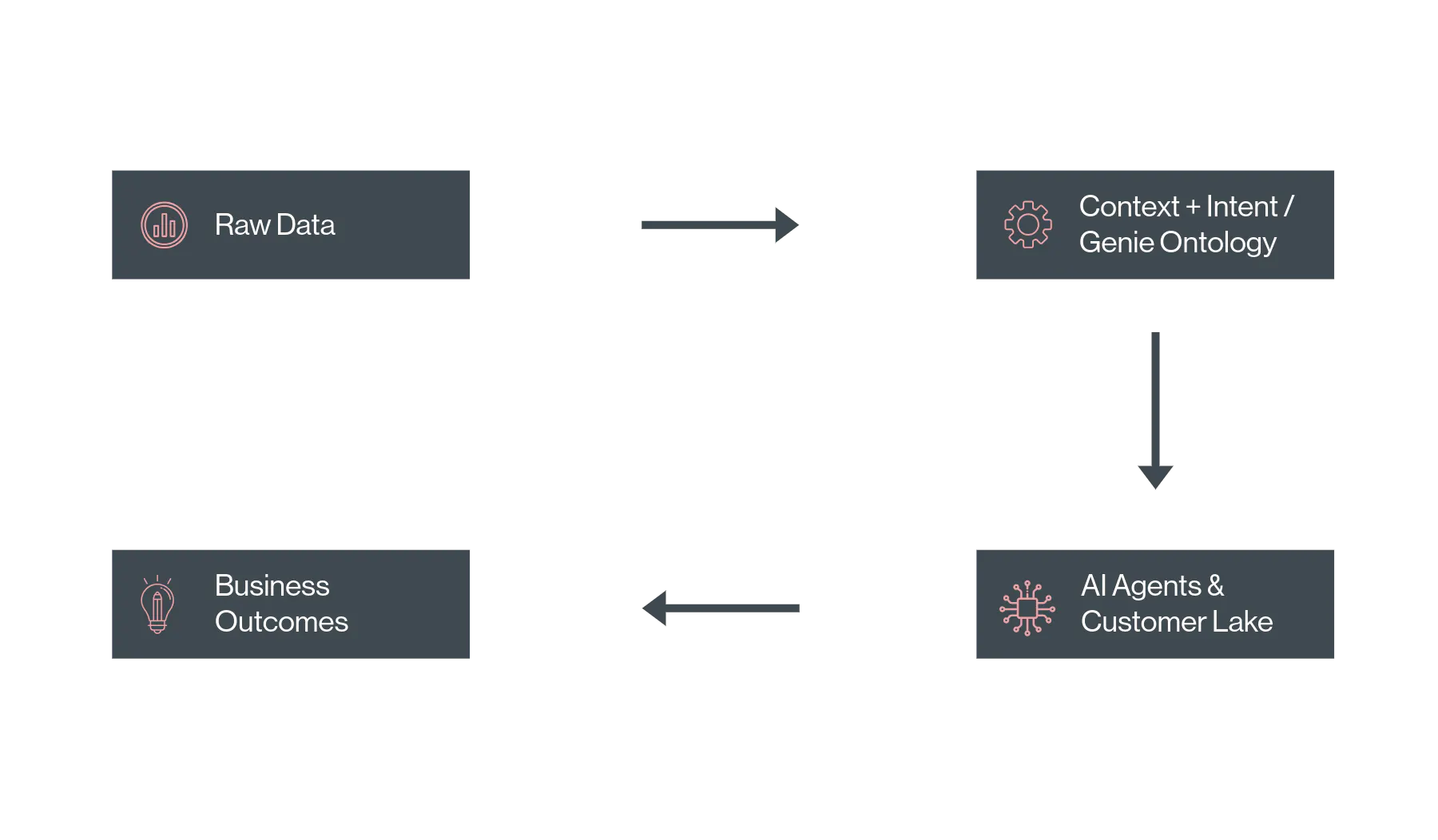
Ontology, in this context, is the mechanism that maps data across all parts of a business so that context flows between sources that wouldn't otherwise communicate. It's not a new data layer on top of your existing stack. It's the connective tissue that allows your data to carry business meaning, intent, relationships, cross-domain signals, rather than just raw values.

The example used on stage was instructive: a multi-brand automotive group can use ontology to understand a shopper's intent across an entire brand portfolio, not just the one brand they happened to enter from first, all while keeping data appropriately anonymized. That's not a data engineering problem. That's a commerce intelligence problem. And Databricks is now squarely in that territory.

Genie ontology: the mechanism

The context layer is what separates a generic AI output from a commercially useful one.

Why retailers and manufacturers should pay close attention

The reason this matters for commerce specifically, is that the use cases demonstrated at Summit are not abstract. They map directly to the problems that enterprise retailers and manufacturers are trying to solve right now.

For a multi-brand manufacturer running dealer networks alongside a direct channel, the ontology question is: can your data understand a buyer's intent across your entire portfolio, and route the right experience accordingly? Today, for most organizations, the answer is no because the context hasn't been encoded into it.
For a specialty retailer managing high-consideration shoppers across online and in-store touchpoints, the question is the same in a different form: can your data connect the signals a shopper leaves across category browsing, product-page engagement, and prior purchase history into a coherent picture of intent? Most commerce stacks today handle each of those signals in isolation. The context layer changes that.

The downstream impact lands in AI agents and the customer lake: the infrastructure that drives personalization, real-time recommendations, and marketing activation. Those systems are only as good as the context they receive. Right now, most are running on data that knows what it is, but not what it's for.

There's also a cost argument that didn't get enough airtime at Summit but is implicit in the direction Databricks is pointing: fewer platforms, better connected and context-enriched, will outperform sprawling stacks. The shift toward business-intent data creates a natural consolidation pressure, less platform surface area, more intelligent output per system.

One thread worth watching separately: the CustomerLake

Their new product CustomerLake surfaced across multiple sessions at Summit as the downstream beneficiary of this context layer and it's a concept that goes meaningfully beyond what most organizations think of as a CDP today.

CustomerLake moves the CDP to where the data already lives. Profile Agents handle identity resolution across offline transactions, online behavior, loyalty accounts, and anonymous browsing. Campaign Agents continuously optimize activation in real time. And with a truly unified data foundation underneath, genuine 1:1 personalization at scale becomes technically achievable for the first time.

For Datmos, this formalizes a direction we've been building toward with our clients for years: structuring and consolidating fragmented commerce data so that personalization, loyalty, and AI agents have a real foundation to work from. Seeing Databricks and our partner Bloomreach put this on the main stage is a signal to the industry that the era of narrow CDPs is over.

Read our dedicated post on CustomerLake

Datmos + Databricks: This is exactly the work we're built for

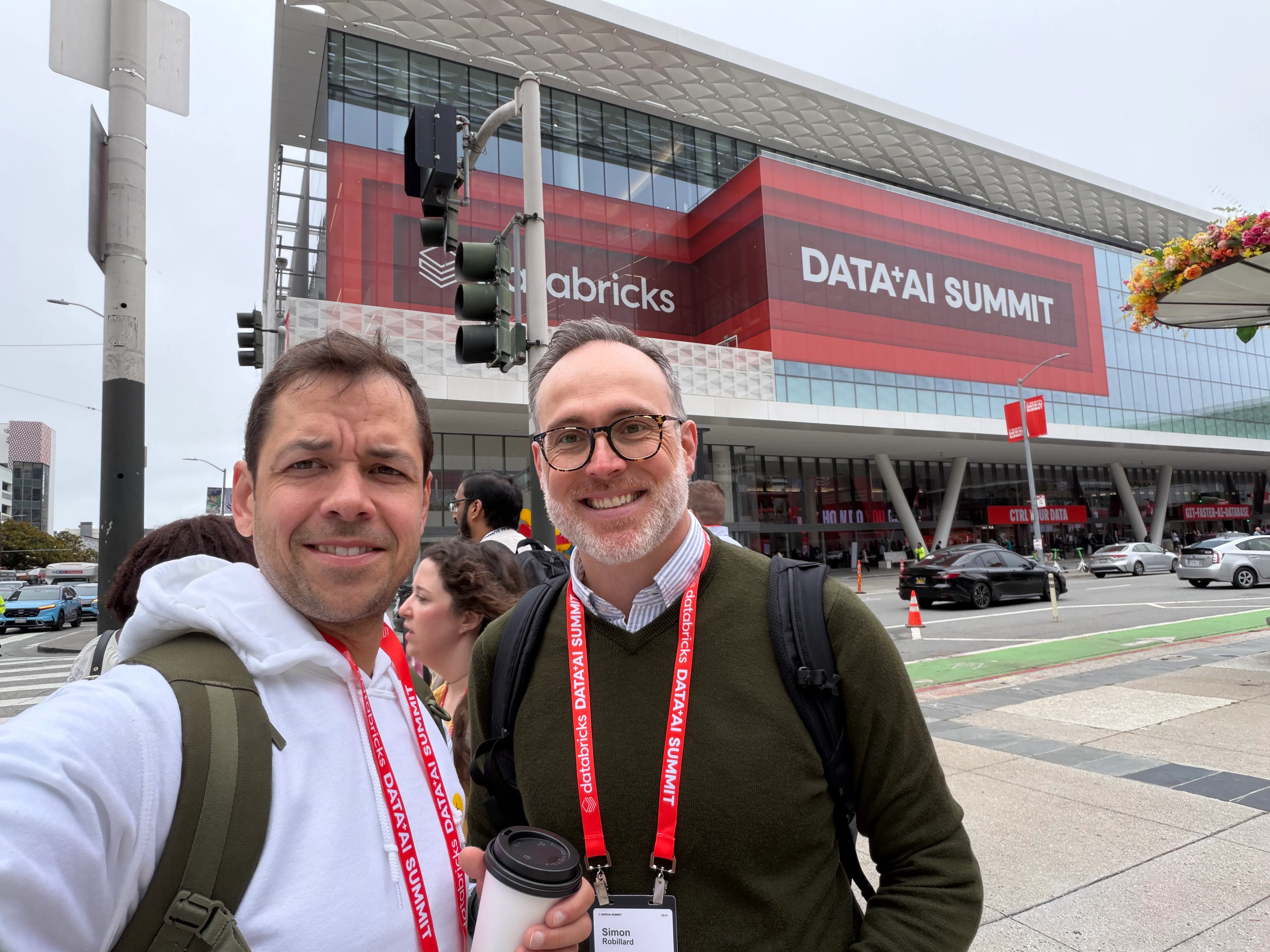
Datmos - CEO & VP Growth at Databricks Summit

Through our strategic partnership with Databricks, Datmos designs high-performance data environments specifically for commerce complexity, the kind that shows up when you're running multi-brand portfolios, dealer networks, high-SKU catalogs, and omnichannel operations simultaneously.

What Summit confirmed is that the next layer of this work isn't more infrastructure, it's business context and intent encoded into the data layer itself. That's the work that makes AI agents produce commercially relevant outputs instead of generic ones. It's the work that lets your marketing stack capture the hidden opportunities your current data stack is walking past. And it's what allows you to consolidate platforms without losing capability.

We've been building in this direction with clients like BRP, THOR Industries, Steelcase, and others navigating exactly this kind of complexity. The Databricks Summit didn't introduce us to a new direction, it validated the one we're already on.

Your data is organized. Is it activated?

If your AI layer is producing generic outputs, your personalization isn't connecting the right signals, or your data stack can't carry business context across systems, that's the problem Databricks just put on the main stage. It's also the problem Datmos is built to solve. Let's talk about what encoding intent into your data actually looks like for your business.

Talk to the Datmos team